Bottled Gold: My Real Talk on Building a Smarter Wine Investment Playbook
You’ve probably heard someone brag about making bank from wine—but is it really worth the hype? I used to think fine wine investing was just for snobs with vaults. Then I dug deeper. Turns out, when done right, it can be a legit part of a balanced portfolio. But it’s not about hoarding fancy bottles. It’s strategy: knowing what to buy, where to store it, and when to cash in—without getting corked by risks. This isn’t a fantasy for the ultra-rich; it’s a growing option for everyday investors seeking stability and long-term appreciation. With the right knowledge, wine can be more than a pleasure—it can be a disciplined financial decision.
Why Wine? The Case for Alternative Assets in Modern Portfolios
Wine as an alternative investment has quietly built credibility over the past two decades, not through flashy headlines but through consistent, measurable performance. Unlike stocks, bonds, or real estate, fine wine operates on a different economic rhythm—one driven by scarcity, craftsmanship, and global demand rather than interest rates or quarterly earnings. This independence is precisely what makes it a compelling diversification tool. When traditional markets experience volatility—such as during inflation spikes or equity corrections—fine wine has historically held or even increased in value. Its low correlation with mainstream asset classes means it doesn’t move in lockstep with the S&P 500 or housing prices, offering a buffer when other investments wobble.
The appeal isn’t just financial. Fine wine represents tangible ownership of a finite, consumable luxury. Unlike digital assets or paper securities, it has physical presence, sensory value, and cultural weight. But its investment merit lies in a powerful trifecta: scarcity, provenance, and longevity. Only a small fraction of the world’s wine production qualifies as investable. Most wines are made for immediate enjoyment and lose value after release. However, a select group—primarily from elite regions like Bordeaux, Burgundy, Piedmont, and Napa Valley—has a proven track record of long-term appreciation. These wines are produced in limited quantities, often from old vines and prestigious terroirs, and are sought after by collectors across continents.
Data supports this niche appeal. The Liv-ex 100 Index, which tracks the performance of the 100 most sought-after wines traded on the London International Vintners Exchange, has delivered average annual returns of around 7% over the past 15 years, with periods of double-digit growth during market upswings. Importantly, this growth has been achieved without dividends or interest—pure capital appreciation driven by market demand. For investors, this means wine doesn’t generate cash flow, but it can compound value over time when managed correctly. It’s not a replacement for core holdings like index funds or government bonds, but rather a satellite allocation that enhances resilience.
Still, wine investing is not a speculative free-for-all. It requires a disciplined mindset. The idea is not to chase trends or buy bottles because they’re expensive at retail. Instead, it’s about identifying wines with strong fundamentals—those with historical demand, consistent quality, and a transparent supply chain. This is where due diligence becomes critical. Investors must evaluate vintage reports, critic scores, producer reputation, and market liquidity before committing capital. Wine is not a liquid asset; selling can take weeks or months, especially for rare bottles. Therefore, the decision to invest must be long-term, patient, and rooted in research rather than emotion.
Laying the Foundation: How to Start Your Wine Investment Journey the Right Way
Entering the world of wine investing without preparation is a recipe for disappointment. Unlike buying stocks through a brokerage account, wine requires a different kind of infrastructure and mindset. The first step is to treat wine not as a hobby, but as a serious asset class. This means setting clear financial goals: Are you looking to build a legacy collection? Generate mid-term gains? Or simply diversify a larger portfolio? Each objective shapes your approach. A legacy builder may focus on rare, long-aging wines from iconic producers, while a mid-term investor might prioritize vintages approaching peak maturity. Clarity here prevents costly missteps.
Next comes education. Knowledge is the most valuable tool in wine investing. Start by learning the basics: understanding vintages, appellations, and the role of critics like Robert Parker or Jancis Robinson. Their scores often influence pricing, especially in the early years after release. A 98-point rating from a respected critic can elevate a wine’s market value significantly. But scores alone aren’t enough. You must also study producer track records. Which châteaux or domaines consistently deliver high-quality wines that appreciate over time? For example, Château Lafite Rothschild and Domaine de la Romanée-Conti have decades of performance data showing steady appreciation. These are not just names; they are brands with global recognition and enduring demand.
Equally important is understanding how wine is traded. Most fine wine changes hands through specialized auctions like Sotheby’s, Acker, or online platforms such as Wine-Searcher or Liv-ex. These markets provide price transparency and liquidity, but they also come with fees. Buyers typically pay a premium of 12–15%, and sellers face commissions. Private sales can reduce costs but increase risk, especially around authenticity. Therefore, starting with reputable dealers or auction houses is wise. Many offer buyer guarantees and provenance verification, reducing the chance of fraud.
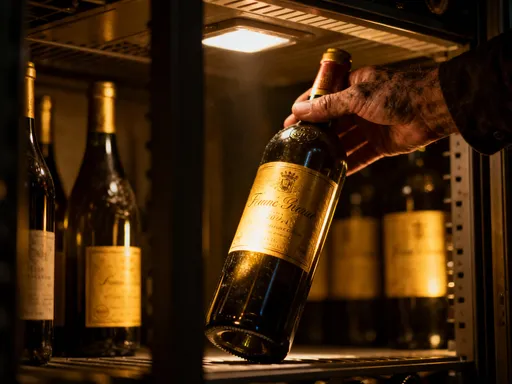
Infrastructure is another pillar of success. Fine wine is perishable. Exposure to heat, light, or fluctuating humidity can ruin its quality and destroy its value. That’s why professional storage is non-negotiable. Home cellars, unless professionally built with climate control, are not suitable for investment-grade wine. Instead, investors should use third-party warehouses that offer temperature and humidity monitoring, insurance, and inventory tracking. These facilities act as secure, neutral custodians, ensuring the wine remains in optimal condition and is easily transferable when sold. Insurance is also essential. Most fine wine can be insured against loss or damage, but premiums vary based on value and location. Factoring in these costs upfront helps avoid surprises later.
Finally, start small. Begin with accessible, blue-chip bottles that have a strong track record but are not prohibitively expensive. Examples include second wines from top Bordeaux estates—like Carruades de Lafite—or entry-level Burgundies from respected producers. These allow you to test the market, learn the process, and build confidence without risking large sums. Patience and discipline are more valuable than speed. The most successful wine investors are not those who make quick trades, but those who build knowledge, maintain discipline, and let time work in their favor.
Picking the Right Bottles: What Actually Appreciates (And What Doesn’t)
One of the biggest misconceptions in wine investing is that all expensive wine will appreciate. The truth is, most will not. A bottle’s price at retail—whether $50 or $500—does not guarantee future value. What matters is market demand, supply constraints, and aging potential. The most reliable performers are wines with **proven demand**, **limited production**, and **decades of track record**. These are typically from first-growth estates in Bordeaux, grand cru vineyards in Burgundy, or legendary producers in Italy and California.
Take Bordeaux’s first growths—Château Lafite Rothschild, Latour, Margaux, Haut-Brion, and Mouton Rothschild. These names dominate the investment landscape for good reason. They produce relatively small quantities each year, have global recognition, and are consistently rated highly by critics. Over the past 20 years, a bottle of Lafite from a top vintage like 2009 or 2010 has appreciated by over 200%, far outpacing inflation. Similarly, Pétrus from Pomerol, with its minuscule production and cult following, often commands prices in the thousands per bottle after a decade or more in the cellar.
Burgundy, though more fragmented in production, offers some of the strongest long-term returns. Domaine de la Romanée-Conti (DRC) is the gold standard, with bottles routinely selling for tens of thousands at auction. Even secondary labels like La Tâche or Grands Échézeaux have shown consistent appreciation. The key in Burgundy is understanding vineyard hierarchy—grand cru and premier cru sites are the only ones with reliable investment potential. Lesser appellations, no matter how well-made, rarely gain value.
Vintage quality is another critical factor. Not every year is equal. A great vintage—such as 2010 in Bordeaux or 2015 in Burgundy—can set a wine on a path of rapid appreciation. Conversely, a weak vintage may never recover, even from a top producer. Therefore, investors must consult vintage charts and expert reviews before buying. Format also plays a role. Larger bottles—magnums (1.5L), double magnums (3L), and imperials (6L)—often appreciate faster than standard 750ml bottles. They are rarer, more desirable for collectors, and age more gracefully due to a better wine-to-oxygen ratio.
On the flip side, many wines that seem like good candidates are actually poor investments. Mass-market luxury brands, even if priced high, lack scarcity and secondary market demand. Super Tuscans like Sassicaia or Ornellaia can work, but only specific vintages and formats. Newer regions—such as Argentina, South Africa, or emerging U.S. AVAs—may produce excellent wine, but they lack the decades of market data needed to predict performance. Without proven demand, they remain speculative. The rule of thumb is simple: stick to established players unless you’re prepared to accept higher risk for uncertain reward.
The Hidden Costs: Storage, Insurance, and Transaction Fees That Eat Returns
Many investors focus only on purchase price and potential resale value, but the real test of profitability lies in the hidden costs that erode returns. These include storage, insurance, authentication, and transaction fees—all of which must be factored into any investment decision. Ignoring them can turn a seemingly profitable bottle into a net loss.
Climate-controlled storage is the most fundamental expense. Fine wine must be kept at a constant temperature (ideally 55–59°F) and humidity level (around 70%) to preserve its integrity. Fluctuations can cause corks to dry out, leading to oxidation, or labels to deteriorate, reducing collector appeal. Professional storage facilities charge annual fees, typically ranging from $10 to $30 per case, depending on location and service level. While this may seem minor, over a 10- or 15-year holding period, it adds up. More importantly, using unverified storage—such as a home basement—can void insurance and make resale difficult due to questionable provenance.
Insurance is another necessary cost. Fine wine is insurable through specialized providers, but premiums depend on the declared value, storage conditions, and geographic location. Rates typically range from 0.25% to 0.75% of the wine’s value per year. For a $50,000 collection, that’s $125 to $375 annually. While not exorbitant, it’s a recurring expense that must be budgeted. Additionally, filing a claim requires documentation—photos, purchase receipts, storage records—so maintaining good records is essential.
Transaction costs are often the biggest drag on returns. When selling through auction houses, sellers typically pay a commission of 8–12%, while buyers pay a premium of 12–15%. This means a $1,000 bottle could generate only $880 for the seller after fees. Private sales can reduce these costs, but they introduce counterparty risk—what if the buyer refuses to pay or disputes authenticity? Third-party escrow services can help, but they charge additional fees. Authentication is another cost, especially for older or rare bottles. Reputable services like Fine Wine Fund or Wine Authenticator charge $50–$200 per bottle to verify provenance and condition.
To determine true profitability, investors must calculate the break-even point: the time and appreciation needed to cover all cumulative costs. A bottle that gains 50% in value over 10 years may still lose money after fees and storage. Therefore, smart investors build these costs into their selection criteria, favoring wines with strong appreciation potential and high liquidity. They also track expenses meticulously, treating their wine portfolio like any other financial asset.
Timing the Market: When to Buy, Hold, or Sell for Maximum Advantage
Wine is not a short-term play. Unlike stocks, which can be bought and sold in seconds, wine investing requires patience and strategic timing. The most advantageous entry point is often en primeur—purchasing wine “as futures” directly from the château after harvest but before bottling. This allows investors to buy at a lower price and secure allocation of highly sought-after vintages. For example, the 2019 Bordeaux en primeur campaign offered access to top wines at prices 20–30% below their eventual market value after release. However, this approach carries risk: you’re paying years in advance, with no guarantee of how the wine will develop or how the market will perform.
Holding period is equally important. Most top-tier wines need 10 to 15 years to reach peak maturity and maximum market value. Selling too early—say, after five years—means missing out on the steepest part of the appreciation curve. Holding too long, especially beyond 25–30 years, risks decline as the wine passes its prime and demand wanes. Therefore, monitoring both the wine’s evolution and market trends is crucial. Tools like the Liv-ex 100 Index provide real-time data on price movements, helping investors spot momentum or cooling demand.
Selling decisions should align with broader financial goals. Is it time to rebalance the portfolio? Fund a major expense? Or simply lock in gains? Auction results offer valuable insights. Strong bidding on recent vintages may signal rising demand, while weak results could indicate oversupply or shifting tastes. Geographic trends also matter. For instance, Asian markets—particularly China and Hong Kong—have become major drivers of fine wine prices. Increased demand from these regions can lift global values, while economic slowdowns there can have the opposite effect.
The key is to avoid emotional decisions. Don’t sell because a wine is suddenly “hot” or hold because you’re attached to it. Instead, use a disciplined framework: set target prices based on historical performance, monitor market indicators, and exit when conditions align with your financial plan. Wine should enhance, not disrupt, your overall wealth strategy.
Risk Control: Avoiding Fakes, Scams, and Emotional Traps in the Wine Game
Fraud is one of the most serious risks in wine investing. Counterfeit bottles—especially of rare, high-value vintages—have been documented in major auctions and private collections. Even experienced collectors and experts have been deceived by sophisticated forgeries. Labels, capsules, and corks can be replicated with alarming accuracy. The most targeted wines are those from legendary producers and vintages, such as 1945 Mouton Rothschild or 1971 DRC La Tâche. Once a bottle is compromised, its value plummets or disappears entirely.
The best defense is provenance—documented ownership history and storage conditions. Always buy from reputable sources: established merchants, auction houses with authenticity guarantees, or direct allocations from producers. Avoid private sellers offering “great deals” on rare bottles. If a price seems too good to be true, it probably is. Authentication services can verify bottles, but they’re not foolproof. Some require invasive methods, like ullage checks (measuring wine levels), which can affect value. Therefore, prevention is better than cure: buy clean, store properly, and keep detailed records.
Equally dangerous are emotional traps. It’s easy to fall in love with a wine’s story, region, or label. But sentiment has no place in investment decisions. Just because you adore a particular Burgundy doesn’t mean it’s a sound financial choice. Stick to your strategy: focus on demand, scarcity, and track record, not personal taste. Over-concentration is another risk. Putting too much capital into a single region, producer, or vintage increases vulnerability. Diversify across regions—Bordeaux, Burgundy, Italy, California—and across vintages and formats. This spreads risk and improves resilience.
Finally, keep wine as a small portion of your overall portfolio—typically 3% to 7%. It should complement, not dominate, your financial plan. This limits exposure to market shifts, fraud, or liquidity crunches. Treat each bottle as part of a system, not a trophy. Discipline, documentation, and diversification are your best allies.
Building a Balanced Portfolio: How Wine Fits Into Your Broader Wealth Strategy
Wine should never be a standalone investment. Its true value emerges when integrated into a broader, well-diversified wealth strategy. Think of it as a long-term, illiquid holding—similar to fine art, vintage cars, or rare collectibles—but with more transparent pricing and a growing body of performance data. It’s not meant to replace liquid assets like stocks or bonds, but to add stability and diversification.
The ideal allocation depends on your financial situation and goals. For most investors, 3% to 7% of investable assets is a prudent range. This allows exposure to wine’s potential returns without overexposing the portfolio to its unique risks. Capital allocated to wine should be surplus—funds you won’t need for at least 10 to 15 years. This matches the typical holding period for top wines to mature and appreciate.
Pair wine with liquid assets to maintain flexibility. Stocks, ETFs, and cash provide immediate access to capital, while wine serves as a long-term store of value. Reassess your wine portfolio annually. Is performance meeting expectations? Are storage and insurance costs justified? Has market sentiment shifted? Use this review to decide whether to hold, sell, or acquire new bottles. This disciplined approach ensures wine remains a strategic asset, not a sentimental hobby.
Ultimately, wine investing is about more than returns. It’s about building wealth with intention. Each bottle, when chosen wisely, contributes to a resilient, thoughtfully constructed financial future. It’s not about turning a cellar into a cash machine. It’s about creating a legacy of smart, deliberate choices—where every decision, from selection to storage to sale, reflects clarity, patience, and purpose.