How I Built a Disaster-Proof Portfolio That Actually Works
What happens to your money when the ground shakes or the floods rise? I learned the hard way after nearly losing everything in a wildfire. That wake-up call pushed me to rethink how I protect my finances—not just grow them. Turns out, preparing for natural disasters isn’t just about emergency kits; it’s about smart financial moves. Here’s how I shifted my strategy to choose resilient products that offer real peace of mind. It wasn’t about chasing higher returns or complex trading systems. Instead, it was about asking a simple but powerful question: what good is wealth if you can’t access it when you need it most? This journey transformed my understanding of security, reshaped my portfolio, and gave me something no market uptick ever could—true financial calm in uncertain times.
The Moment Everything Changed
It started with a red alert on my phone at 3:17 a.m. Smoke was rolling into our valley, and evacuation orders followed within the hour. In the chaos, my husband grabbed the dog, our passports, and a backpack of clothes. I snatched my laptop and wallet. We left behind photo albums, heirlooms, and—most painfully—access to our financial life. The power went out before we reached the highway. Our phones died by midday. ATMs were down. Gas stations wouldn’t accept cards. For three days, we lived in a motel 80 miles away, relying on cash we happened to have in the glove compartment—$327. That was it. No bank transfers. No mobile payments. No way to prove we owned stocks worth six figures. I remember standing in line at a grocery store, counting crumpled bills, feeling a deep shame and helplessness. I had done everything 'right'—maxed retirement accounts, diversified holdings, automated investments—but none of that mattered when the systems froze. My portfolio was technically intact, but functionally useless.
The emotional toll came later. Once we returned to a home that still stood—though surrounded by ash—we faced a new reality. Rebuilding meant immediate cash. Insurance would reimburse eventually, but not now. Contractors demanded down payments in advance. Rental deposits, temporary housing, replacement furniture—all required liquidity. I had to sell investments at a loss just to raise funds, locking in losses during a volatile market dip. That experience exposed a critical flaw in conventional financial planning: it assumes continuity. It assumes banks stay open, markets remain liquid, and digital access persists. But history shows us that assumption is fragile. Hurricanes, wildfires, earthquakes, and even cyberattacks can disrupt financial infrastructure for days or weeks. And when that happens, wealth measured on a screen becomes meaningless if it can’t be converted into shelter, food, or fuel.
That moment changed my definition of financial success. It wasn’t just about growing net worth anymore. It was about durability. Could my money survive a crisis? Could I access it without relying on a single point of failure? These questions led me down a path most financial advisors don’t discuss—because they fall outside traditional models. Yet, for families, especially those responsible for children or aging parents, this kind of resilience isn’t optional. It’s essential. The shift began not with a new investment, but with a new mindset: financial security must include both growth and survivability.
Why Standard Investments Fall Short in Crises
Most people believe a diversified portfolio of stocks, bonds, and savings accounts is enough to weather any storm. In normal conditions, that’s sound advice. But during a natural disaster, the rules change. Digital systems fail. Communication networks collapse. Banks close. In those moments, even a well-balanced portfolio can become inaccessible. Stocks, while valuable over time, offer no immediate utility when the lights are out. You can’t trade shares at a convenience store or use mutual fund units to pay a contractor. The liquidity gap becomes glaring. Many investors don’t realize that brokerage accounts often require several days to settle trades. Selling stock today might not yield cash for three business days—and that’s only if the clearing systems are operational.
Bond holdings, particularly government or municipal issues, are seen as safe. But their safety assumes functioning institutions. During Hurricane Katrina, many residents found their municipal bonds were tied to local governments that had ceased operations. Payments stopped. Access to statements vanished. Even U.S. Treasury securities, while backed by the full faith of the government, require working banks and digital platforms to redeem. In Puerto Rico after Hurricane Maria, the financial system was down for weeks. People with millions in retirement accounts couldn’t withdraw a single dollar because the infrastructure to process transactions didn’t exist. Savings accounts face similar risks. Yes, they’re FDIC-insured up to $250,000, but insurance doesn’t guarantee access. If your bank’s branches are destroyed and online banking is offline, that money might as well be on the moon.
The deeper issue is dependency on centralized systems. Modern finance runs on electricity, internet, and trust in institutions. When any one of those fails, the entire chain breaks. Credit cards fail when networks go down. Mobile payments stop working without cell service. Even direct deposits can be delayed if employers can’t connect to payroll processors. I spoke with a financial planner in California who told me about clients during the 2018 Camp Fire who couldn’t prove identity or account ownership because their documents burned with their homes. No digital backup. No access to cloud storage. Their financial lives were erased not by market loss, but by physical destruction. This isn’t a hypothetical scenario. It’s a recurring pattern in disaster zones. The lesson is clear: traditional investments are excellent for long-term growth, but they are not designed for crisis survival. They lack the immediacy, tangibility, and independence needed when everything else fails.
What Makes a Financial Product Truly Resilient?
Resilience in finance isn’t about high returns or beating the market. It’s about reliability when systems fail. A truly resilient financial product must meet four key criteria: liquidity, accessibility, stability, and independence from local infrastructure. Liquidity means the asset can be converted to usable funds quickly—within hours, not days. Accessibility means you can reach it without relying on electricity, internet, or third-party approval. Stability refers to minimal volatility; you don’t want your emergency funds dropping 20% in a week. Independence means the asset isn’t tied to a single institution, region, or digital platform. When all four are present, you have a tool that works when you need it most.
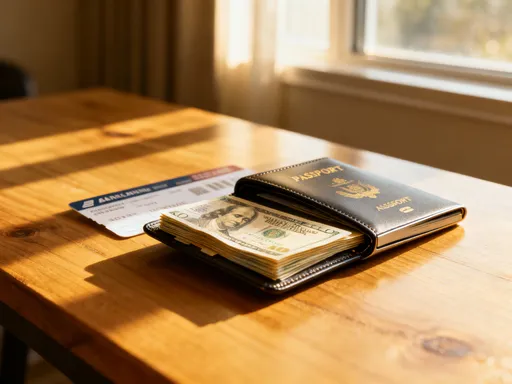
Cash is the simplest example. Physical currency meets all four criteria. It’s instantly spendable, requires no technology, holds stable value in the short term, and isn’t dependent on any single system. But cash has limits—storage risk, theft, and inflation over time. That’s why resilience isn’t about replacing traditional investments, but complementing them. Precious metals like gold and silver have been used for centuries as crisis assets. They’re tangible, globally recognized, and not tied to any one country’s financial system. While their market price fluctuates, they retain purchasing power over time and can be exchanged in informal markets when banks are down. I keep a small amount of gold coins in a secure, accessible location—not for speculation, but as a fallback option.
Another resilient option is short-term Treasury bills held in physical form or through systems that allow direct redemption. Unlike stocks, T-bills mature in less than a year and can be structured to provide predictable cash flow. Some investors use offshore accounts in politically stable countries with strong banking systems, though this requires careful legal and tax planning. The goal isn’t to hide money, but to reduce exposure to region-specific risks. For example, a family in Florida might hold part of their emergency fund in a Canadian dollar account, insulated from hurricanes and local banking disruptions. The key is balance: these tools aren’t meant to generate wealth, but to preserve it when volatility spikes.
Resilience also includes non-financial elements—like having printed copies of account numbers, passwords, and legal documents stored in a fireproof safe or with a trusted relative. I learned this the hard way. After the fire, it took months to reconstruct our financial records. We had no printed statements, no offline backups. Everything was in the cloud—except when the cloud was unreachable. Today, I keep a sealed envelope with essential financial details, updated twice a year. It includes bank names, account numbers, insurance policies, and contact information for advisors. This isn’t paranoia. It’s practical preparation. True financial resilience combines the right assets with the right access methods, creating a system that works even when the normal rules don’t.
The Core: Diversifying Beyond Traditional Assets
Diversification is a cornerstone of investing, but most portfolios only diversify within the financial system—stocks, bonds, real estate, ETFs. True resilience requires diversification beyond that system. This means including assets that don’t move in lockstep with markets and aren’t dependent on digital infrastructure. Physical cash is the foundation. I now keep a designated emergency fund in cash, stored securely at home, equal to one month of essential expenses. It’s not earning interest, but it’s available 24/7, no questions asked. This isn’t a radical idea—it’s standard advice in disaster preparedness circles, yet rarely discussed in financial planning.
Next is precious metals. I allocate a small percentage of my portfolio—under 5%—to physical gold and silver. These are stored in a safety deposit box outside my immediate area, in case local access is blocked. The purpose isn’t speculation. It’s about having an asset that holds value across borders and systems. In countries with hyperinflation or banking crises, gold has often been the only reliable store of value. While the U.S. isn’t facing that extreme, the principle applies during localized disasters. When ATMs fail and credit cards don’t work, tangible assets can still be traded. I’ve spoken with preppers who dismiss stocks entirely, but that’s an overcorrection. The goal isn’t to abandon the financial system, but to have alternatives when it falters.
Geographic diversification is another layer. I opened a low-balance checking account in a national bank with branches across multiple regions. If a disaster hits my state, I can access funds in another. This isn’t about tax evasion or secrecy—it’s about redundancy. I also hold a portion of savings in U.S. dollars in a foreign account, not to avoid regulations, but to reduce exposure to a single currency’s instability. Currency shocks do happen, especially during prolonged crises. Having funds in a stable foreign currency can provide flexibility if domestic conditions deteriorate.
Finally, I include short-term, low-volatility instruments like Treasury inflation-protected securities (TIPS) and high-quality municipal bonds with early redemption options. These aren’t meant for long-term growth, but for quick conversion to cash without market risk. The idea is to create a tiered system: immediate access (cash), short-term stability (T-bills, TIPS), and long-term growth (stocks, retirement accounts). Each layer serves a different purpose. This approach doesn’t eliminate risk, but it reduces vulnerability to any single point of failure. It’s like having multiple escape routes in a fire—smart, practical, and life-preserving.
Smart Access: Building Redundant Financial Pathways
Having resilient assets is only half the battle. You must also be able to reach them when systems fail. This means building redundant access points—multiple ways to prove identity, move money, and make payments. I now keep a small emergency debit card with a modest balance, separate from my primary accounts. It’s stored in a different location, so if my wallet is lost or stolen during evacuation, I still have access. The card is linked to a secondary bank, one with a different online system and customer service line. This reduces the risk of total lockout if one institution goes down.
I also use offline banking tools. Many credit unions and regional banks offer services that work without internet—like phone-based transfers or branch-only accounts. I’ve tested these systems by calling customer service during simulated outages. It sounds extreme, but it’s no different than testing a fire extinguisher. I’ve also designated a trusted family member as a joint account holder with full access. We’ve discussed the rules: only in emergencies, with clear documentation. This avoids confusion and ensures someone can act if I’m unable. Sharing access isn’t about losing control—it’s about ensuring continuity.
Documentation is critical. I keep printed copies of all account details, insurance policies, and legal documents in a fireproof and waterproof safe. I also store digital copies on an encrypted USB drive, kept in a different location. Cloud storage is useful, but it’s not enough. I learned that when my email was down for a week after the fire. Today, I update these records every six months. I also have a simple one-page financial summary—names, numbers, passwords, contacts—that I can hand to a family member in an emergency. It’s not detailed enough to be risky if lost, but sufficient to restore access quickly.
Another step is using prepaid cards with stored value. These can be loaded in advance and kept as backup. Unlike credit cards, they don’t require a credit check or online approval. I keep one with $500, ready to go. It’s not a long-term solution, but it bridges the gap until systems recover. The goal is to eliminate single points of failure. If one system fails, another works. If one location is compromised, another is available. This isn’t fear-based thinking—it’s risk management. Just as homes have backup generators, financial lives need backup pathways.
Balancing Safety and Growth in Uncertain Times
Building a disaster-proof portfolio doesn’t mean abandoning growth. The goal is balance—protecting against short-term shocks without sacrificing long-term security. I still invest in index funds, retirement accounts, and dividend-paying stocks. These remain the engine of wealth creation. But now, I allocate a portion—about 10%—to crisis-resilient assets. This includes cash, precious metals, and short-term instruments. That 10% isn’t meant to grow rapidly. It’s a safety buffer, like insurance. I don’t expect it to outperform the market. I expect it to be there when the market isn’t.
Allocation depends on personal circumstances. A single person in a low-risk area might need less. A family in a hurricane zone might need more. I review my allocation annually, adjusting for life changes and risk exposure. I avoid over-committing to illiquid assets like real estate or speculative investments. While real estate can be valuable, it’s not accessible in a crisis. You can’t sell a house in a day. Similarly, I steer clear of high-risk alternatives like cryptocurrencies, not because they lack potential, but because their volatility and regulatory uncertainty make them poor crisis tools. Resilience favors simplicity and reliability over complexity and speculation.
The psychological benefit is just as important as the financial one. Knowing I have multiple ways to access funds reduces anxiety. I sleep better, knowing my family won’t be stranded without resources. This peace of mind allows me to stay invested for the long term, without panic during market dips. I no longer sell in fear, because I have options. That emotional stability is a hidden return—one that compound interest can’t measure. Financial planning isn’t just about numbers. It’s about confidence, clarity, and control. By balancing safety and growth, I’ve built a portfolio that works in all conditions, not just the calm ones.
A New Mindset: Wealth That Survives the Storm
Financial resilience is more than a strategy. It’s a mindset shift—from chasing returns to ensuring access, from measuring wealth by balance to valuing it by durability. The fire taught me that true security isn’t found in a high account number, but in the ability to act when it matters most. Today, I assess every financial decision through this lens: does this increase my flexibility? Can I reach it if everything fails? This doesn’t mean living in fear. It means living with foresight.
I encourage others to do the same. Start small. Build a cash reserve. Print your documents. Test your access. Talk to your family. These steps take time, but they build confidence. Resilience isn’t about predicting disasters. It’s about preparing for uncertainty. In a world of rising climate risks and digital dependencies, this kind of planning isn’t extreme—it’s essential. It’s the quiet strength behind long-term financial well-being. Wealth that survives the storm isn’t just protected. It’s empowered. And that’s the kind of security no market cycle can take away.