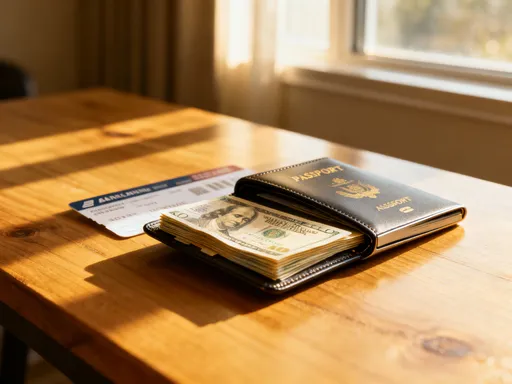
How I Built a Travel Fund That Actually Grows Without the Stress
Ever dreamed of traveling more but watched your savings vanish into rent and bills? I’ve been there—excited to plan a trip, only to realize my wallet said no. So I stopped guessing and started building a smarter way to save. Not a get-rich-quick scheme, but a steady, low-risk method that actually lets my travel fund grow while I sleep. Let me walk you through how I turned my “someday” trips into real, funded plans—without risking what I’ve saved. It wasn’t about earning more or making drastic cuts. It was about changing how I thought about saving, protecting my money, and letting it grow in a way that matched my life. This isn’t a fantasy. It’s a repeatable strategy that works for anyone who values peace of mind as much as passport stamps.
The Dream vs. The Reality: Why Most Travel Funds Fail
Many people start with enthusiasm, picturing themselves on a sunlit beach or walking through a bustling European market. They open a new savings account labeled “Travel” and promise to feed it regularly. Yet, within months, the balance remains unchanged—or worse, disappears. The dream doesn’t fade because travel is too expensive. It fades because the savings strategy wasn’t built to survive real life. The most common mistake is treating a travel fund like a regular checking account, where money flows in and out with little oversight. Without clear boundaries, it becomes tempting to use those funds for car repairs, medical bills, or holiday gifts. The line between “fun money” and “future memories” blurs, and the travel goal gets pushed aside.
Another frequent pitfall is emotional decision-making. People often save in bursts—after a tax refund, a bonus, or a moment of inspiration—only to stop when daily expenses take priority. This stop-start rhythm prevents compound growth and weakens commitment. Some try to accelerate results by investing travel savings in high-risk assets like individual stocks or speculative funds. While the potential for higher returns exists, so does the risk of loss. A market downturn just months before a planned trip can wipe out months of progress, turning excitement into stress. These approaches fail not because of lack of desire, but because they lack structure, patience, and alignment with financial reality.
There’s also the issue of invisibility. When a travel fund sits untouched in a standard savings account with minimal interest, it feels stagnant. Inflation quietly erodes its value, and the lack of visible growth makes it easy to lose motivation. Without a sense of progress, the fund becomes an afterthought rather than a priority. The gap between dreaming and doing is not a lack of money—it’s a lack of a reliable system. The solution isn’t more willpower. It’s a smarter design: one that separates the fund, protects it, grows it steadily, and integrates it into everyday financial habits without disruption.
What Is a Sustainable Travel Fund? (And Why It’s Not Just a Piggy Bank)
A sustainable travel fund is more than a place to store cash. It’s a purpose-driven financial vehicle designed to grow safely over time while remaining accessible when the trip arrives. Unlike a piggy bank, which relies on sporadic deposits and offers no growth, a well-structured fund works for you. The first principle is separation. Just as you wouldn’t mix paint colors in the same can, you shouldn’t blend travel savings with everyday spending. Keeping the fund in a dedicated account creates a psychological and practical barrier, reducing the temptation to dip into it for non-travel needs. This separation reinforces commitment and makes progress visible.
But separation alone isn’t enough. A sustainable fund must also have growth potential. Leaving money in a traditional savings account with near-zero interest means losing ground to inflation. Over time, the same amount of money buys fewer plane tickets or hotel nights. That’s why upgrading to a high-yield savings account is a simple but powerful step. These accounts, often offered by online banks, provide significantly higher interest rates while maintaining liquidity and FDIC insurance. The returns aren’t spectacular, but they’re consistent and risk-free, allowing your money to grow passively.
For goals that are two to five years away, slightly more advanced options become appropriate. Short-term bond funds or Treasury Inflation-Protected Securities (TIPS) offer modest yields with low volatility. These instruments are less sensitive to market swings than stocks, making them suitable for intermediate goals. The key is matching the investment choice to the timeline. If the trip is less than a year away, safety and access are paramount. If it’s further out, a small portion can be allocated to slightly higher-return, low-risk assets. The goal isn’t to chase performance, but to prevent erosion and build momentum. A sustainable travel fund, therefore, is not a static container. It’s a dynamic part of a balanced financial plan—one that respects both time and risk.
The Risk-Return Balance: Protecting Your Fund While Letting It Grow
When saving for a specific goal like travel, the priority isn’t maximizing returns—it’s preserving capital while earning a modest gain. This is where the risk-return balance becomes essential. Unlike long-term retirement investing, where volatility can be absorbed over decades, travel funds have a fixed timeline. A sudden market drop six months before departure could force a cancellation or downgrade. That’s why aggressive investments are inappropriate, no matter how promising they seem. The focus must remain on stability, predictability, and protection.
One effective strategy is laddered certificates of deposit (CDs). By spreading money across CDs with different maturity dates—say, 6, 12, 18, and 24 months—you gain access to higher interest rates while maintaining flexibility. As each CD matures, the funds can be reinvested or used for travel, depending on the plan. This approach reduces interest rate risk and ensures that not all money is locked up at once. It’s a disciplined way to earn more than a standard savings account without exposing the entire fund to market uncertainty.
Money market funds are another solid option. These are mutual funds that invest in short-term, high-quality debt instruments like government securities and commercial paper. They offer slightly higher yields than savings accounts and are considered very low risk. While not FDIC-insured, they have a strong track record of preserving principal. For investors who want a bit more return without complexity, diversified bond ETFs focused on short- to intermediate-term bonds can be appropriate. These funds spread risk across many issuers and maturities, reducing the impact of any single default.
The common thread in all these choices is caution. They won’t double your money, but they won’t lose it either. The returns may seem small—perhaps 3% to 5% annually under current conditions—but they compound over time and outpace inflation. More importantly, they allow you to sleep soundly knowing your travel fund is safe. This balance—growth without gambling—is what turns a dream into a dependable plan. It’s not about getting rich. It’s about arriving at the airport with confidence, knowing your savings made the trip possible.
Automate to Elevate: Building a Hands-Off Savings System
Willpower is unreliable. Motivation fades. But automation doesn’t. The most effective way to grow a travel fund is to remove the need for constant decision-making. By setting up automatic transfers, you turn saving into a background process—one that works whether you’re thinking about it or not. The principle is simple: pay yourself first. Just as taxes and bills are deducted automatically from a paycheck, a portion should go directly into the travel fund before it even reaches your checking account.
Most banks allow recurring transfers between accounts. You can schedule a fixed amount—or a percentage of each paycheck—to move on the same day every month. For example, $200 from every biweekly paycheck becomes $5,200 in a year. That’s enough for a two-week trip to many international destinations. The consistency matters more than the size. Small, regular contributions build momentum and reduce the psychological burden of “finding” money each month. Over time, automation turns saving from a chore into a habit.
Technology has made this even easier. Many financial apps offer round-up features, where everyday purchases are rounded up to the nearest dollar, and the difference is transferred to savings. Buying a coffee for $4.75? The extra $0.25 goes to your travel fund. These micro-deposits add up quickly and feel painless because they’re invisible in daily spending. Some platforms even allow users to set rules—like saving 10% of every transaction at restaurants or redirecting bonuses automatically.
Automation also supports long-term discipline. When savings happen without effort, there’s no need to debate whether to save this month. Life gets busy, emergencies arise, and priorities shift. But if the system is already in place, the fund continues to grow. It becomes a silent partner in your financial life. Combined with periodic reviews—say, every six months to adjust for income changes or travel plans—automation creates a sustainable, low-maintenance path to your goals. The result is steady progress, free from guilt or last-minute scrambling.
Smart Trade-Offs: Where to Cut Without Killing the Joy
Building a travel fund doesn’t require living frugally or giving up everything you love. The key is making smart trade-offs—small adjustments that free up money without diminishing quality of life. The goal isn’t deprivation. It’s reallocation. Most households have expenses that provide little long-term value but drain cash over time. Identifying and modifying these creates room for travel without sacrifice.
One common area is subscriptions. It’s easy to accumulate streaming services, fitness apps, and membership boxes without realizing how much they cost. A quick audit often reveals $30 to $50 a month going to services rarely used. Cutting one or two and keeping only the most valued ones can redirect hundreds per year toward travel. The lifestyle doesn’t suffer—only the clutter does. Similarly, dining out can be adjusted without elimination. Choosing to cook at home four nights a week instead of two still allows for restaurant enjoyment, but reduces the monthly bill significantly. Packing lunch for work a few days a week has a similar effect.
Another powerful shift is in shopping habits. Impulse buys, especially online, add up quickly. Implementing a 24-hour rule—waiting a day before making non-essential purchases—can reduce unnecessary spending by 20% or more. Switching to store brands for groceries, buying in bulk, or using cashback apps also frees up funds. These changes aren’t about living with less. They’re about spending with intention. When money flows toward what truly matters—like experiencing new cultures, seeing family abroad, or relaxing in a peaceful destination—the trade-offs feel worthwhile.
This approach is called value-based budgeting. It starts with identifying what brings real joy and aligning spending with those values. If travel is a top priority, then redirecting funds from lower-value areas makes sense. The travel fund becomes a reflection of personal values, not a financial burden. Over time, this mindset shift turns saving into a positive act of self-care and fulfillment, rather than a restriction.
When Life Happens: Keeping Your Fund Safe from Emergencies
Even the best-laid plans can be derailed by unexpected events—a car breakdown, a medical expense, or a sudden flight change. Without a buffer, it’s tempting to raid the travel fund to cover these costs. But doing so undermines progress and delays dreams. That’s why a separate emergency fund is essential. It acts as a financial shock absorber, protecting long-term goals from short-term disruptions.
A basic emergency fund doesn’t need to be large. For most households, $1,000 to $3,000 in a liquid, easily accessible account is enough to handle minor crises. This fund should be kept in a high-yield savings account or money market fund—safe, available, and slightly productive. The rule is simple: this money is only for true emergencies, not for shopping or unplanned vacations. Once used, it should be replenished as quickly as possible, ideally within a few months.
Having this safety net changes behavior. Knowing there’s a backup for unexpected costs reduces anxiety and prevents impulsive decisions. It allows the travel fund to remain untouched, continuing to grow toward its goal. Without it, every surprise becomes a threat to future plans. The emergency fund and the travel fund work together—one protects the present, the other builds the future. They are not competing priorities, but complementary parts of financial stability.
It’s also wise to set clear rules for when to use the emergency fund. For example, car repairs over $500, urgent medical costs, or essential home repairs qualify. A flat tire or a prescription refill shouldn’t derail a dream, but without a plan, they often do. By defining thresholds in advance, you maintain control and avoid emotional choices. This structure creates resilience, allowing life to continue smoothly even when surprises arise.
From Goal to Reality: Tracking, Adjusting, and Booking with Confidence
A plan is only effective if it’s monitored and adjusted. Regular check-ins—quarterly or semi-annually—help track progress, celebrate milestones, and make necessary changes. Seeing the fund grow reinforces motivation and confirms that the system is working. If contributions are on track and returns are as expected, booking the trip becomes a confident decision, not a leap of faith.
Tracking doesn’t have to be complicated. A simple spreadsheet or budgeting app can show the balance, contributions, and projected growth. Comparing actual performance to the original goal reveals whether adjustments are needed—like increasing monthly deposits or extending the timeline slightly. These decisions are best made calmly, not under pressure. If the fund is growing slower than expected, it’s better to adapt early than to risk disappointment later.
Knowing when to book is also part of the strategy. Airfares and accommodations often have optimal booking windows. For international travel, booking 3 to 6 months in advance frequently offers the best prices. Having the funds ready allows you to act when deals appear, rather than waiting and missing opportunities. It also reduces stress—there’s no last-minute scramble to raise money. The trip is already paid for, or nearly so, thanks to consistent saving.
Finally, celebrating milestones strengthens commitment. Reaching 25%, 50%, or 75% of the goal deserves recognition—perhaps a small treat or a family discussion about the upcoming adventure. These moments build excitement and reinforce the value of patience and discipline. When the trip finally happens, it’s not just a vacation. It’s proof that thoughtful planning and steady effort can turn dreams into reality. The memories last far longer than the money spent—and the confidence gained lasts a lifetime.