Victoria’s Architectural Soul: A Walk Through Time and Beauty
Stepping into Victoria, Canada, feels like entering a living storybook where every building whispers history. From Victorian-era charm to modern coastal design, the city’s architecture blends elegance and nature in surprising ways. I never expected such visual harmony—heritage facades meet ocean breezes, and old-world grandeur stands proudly beside quiet gardens. This is more than sightseeing; it’s an immersion into a city that honors its past while embracing the present. The built environment here does not shout for attention but instead invites quiet admiration, offering a sense of continuity and care that resonates deeply with those who walk its streets. In Victoria, architecture becomes a language of belonging, tradition, and thoughtful evolution.
First Impressions: The Visual Identity of Victoria
Victoria’s architectural character reveals itself immediately upon arrival. Whether arriving by ferry from the mainland or stepping off a regional flight, visitors are greeted by a city that seems to grow naturally from its coastal setting. Unlike many urban centers where skyscrapers dominate, Victoria maintains a low skyline, preserving sightlines to the water and surrounding hills. This deliberate restraint reflects a long-standing commitment to harmony between built and natural environments. The city’s visual identity is shaped by its unique blend of British colonial heritage and Pacific Northwest sensibility, resulting in a townscape that feels both refined and relaxed.
The use of natural materials—stone, brick, timber, and stucco—predominates, often painted in soft pastels like sage green, butter yellow, and rose beige. These colors soften the cityscape, giving it a gentle, welcoming quality. Rooflines are varied and expressive, with many buildings featuring steeply pitched gables, dormers, and decorative eaves. Ornamental woodwork, known as gingerbread trim, adorns porches and gables, a signature of 19th-century craftsmanship. Windows are often multi-paned, with double-hung sashes that speak to an era when ventilation and natural light were central to design.
Downtown Victoria, particularly around the Inner Harbour, offers a concentrated display of this architectural identity. Here, federal, provincial, and municipal buildings stand in close proximity, each contributing to a sense of historical continuity. The British Columbia Parliament Buildings, with their symmetrical layout, copper domes, and elaborate stonework, serve as a civic anchor. Designed by Francis Rattenbury and completed in 1898, they reflect the confidence and ambition of a young province. The building’s façade is rich with sculptural detail, including figures representing industry, agriculture, and justice, reminding visitors of the values that shaped the region.
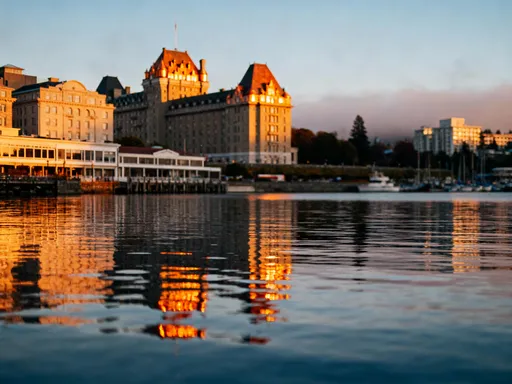
Equally iconic is the Fairmont Empress, a grand hotel that has welcomed guests since 1908. Its Châteauesque design—with turrets, steep roofs, and sprawling verandas—immediately captures the eye. The hotel’s copper-clad towers have developed a distinctive green patina over time, blending subtly with the surrounding treetops. At dawn, when the harbor is still and the first light catches the rooftops, the city feels suspended in time, a place where beauty and function coexist in quiet balance.
The Legacy of Victorian and Edwardian Design
The name “Victoria” is more than a nod to the British monarchy—it is a reflection of the city’s deep architectural roots in the Victorian and Edwardian eras. These styles, popular from the late 1800s through the early 1900s, continue to define much of the city’s residential character. Neighborhoods such as James Bay, Fairfield, and Rockland are home to some of the best-preserved examples of this period in Canada. Tree-lined avenues, often bordered by heritage oaks and maples, guide the eye toward homes adorned with bay windows, wraparound porches, and intricate wood detailing.
Victorian homes in Victoria typically feature asymmetrical façades, varied rooflines, and decorative elements that reflect the prosperity and optimism of the era. Many include stained-glass transoms above doors, floral-patterned tiles in entryways, and hand-carved newel posts on staircases. Interior layouts often center around a formal parlor, dining room, and kitchen, with bedrooms located upstairs. Though modest by today’s standards, these homes were designed for comfort, light, and social connection—values that remain relevant.
Edwardian architecture, which followed the Victorian period, brought a slightly more restrained aesthetic. Homes from this era often have wider floor plans, larger windows, and simpler ornamentation. Porches are more integrated into the main structure, and interior spaces flow more openly. Despite these differences, both styles share a commitment to craftsmanship and attention to detail that is increasingly rare in modern construction.
Preservation has played a crucial role in maintaining Victoria’s architectural legacy. The city has implemented strict heritage guidelines that protect designated buildings from inappropriate alterations or demolition. The Victoria Heritage Register includes over 1,500 properties, many of which are private homes. This collective effort ensures that future generations can experience the texture and warmth of buildings crafted by hand. Walking tours, such as those offered by the Victoria Heritage Foundation, allow visitors to explore these homes up close, learning about original features like clawfoot tubs, plaster moldings, and coal-fired heating systems that once warmed entire households.
Châteauesque Grandeur: The Influence of Railway Architecture
No discussion of Victoria’s architecture would be complete without acknowledging the Fairmont Empress, a masterpiece of Châteauesque design. This architectural style, inspired by the grand châteaux of France’s Loire Valley, was popularized across Canada by railway companies in the late 19th and early 20th centuries. The goal was not merely to provide lodging but to create monuments that symbolized luxury, permanence, and national pride. The Empress, commissioned by the Canadian Pacific Railway, was intended to be a destination in itself—a place where travelers would feel they had arrived somewhere extraordinary.
The hotel’s design, by architect Francis Rattenbury, combines romantic silhouettes with functional grandeur. Its steeply pitched roofs, round corner towers, and ornate dormer windows give it a fairy-tale quality, while its central location on the Inner Harbour ensures it remains a focal point of civic life. Inside, the grand staircase, marble floors, and crystal chandeliers reinforce the sense of occasion. The iconic Tea Lobby, with its arched windows and live piano music, continues a tradition that began over a century ago, drawing both tourists and locals into a ritual of elegance and calm.
What makes the Empress truly remarkable is its ability to evolve without losing its soul. Over the decades, the hotel has undergone multiple renovations to update plumbing, electrical systems, and guest amenities. Yet each restoration has been guided by a commitment to historical accuracy. Original woodwork has been preserved or replicated, period-appropriate fabrics have been selected, and public spaces have been returned to their former glory. This balance between preservation and modernization serves as a model for how heritage buildings can remain relevant in the 21st century.
The influence of Châteauesque architecture extends beyond the Empress. Elements of the style can be seen in other civic buildings, including the former Dominion Public Building and certain provincial offices. These structures share a common language of masonry, symmetry, and vertical emphasis, creating a sense of unity across the city’s institutional architecture. While not all are open to the public, their presence contributes to a streetscape that feels dignified and enduring.
West Coast Modernism: Blending Nature and Structure
While Victoria is celebrated for its historic buildings, it is also home to a thriving tradition of contemporary architecture known as West Coast modernism. This design philosophy emerged in the mid-20th century as architects sought to respond to the region’s temperate climate, abundant rainfall, and dramatic natural scenery. Rather than imposing on the landscape, West Coast modern homes and buildings aim to blend with it, using materials, forms, and spatial arrangements that honor the surrounding environment.
Key characteristics of this style include open floor plans, large expanses of glass, post-and-beam construction, and the use of natural materials such as cedar, stone, and concrete. Roofs are often flat or gently sloped, sometimes covered with vegetation to reduce runoff and improve insulation. Interiors are designed to maximize natural light and create seamless transitions between indoor and outdoor living spaces. Patios, decks, and courtyards become extensions of the home, inviting residents to engage with the seasons and the elements.
In Victoria, examples of West Coast modernism can be found throughout newer residential developments and civic projects. Homes perched on the slopes of Mount Tolmie or nestled along the shores of Cadboro Bay demonstrate how architecture can adapt to challenging terrain while preserving views and privacy. Large windows frame evergreen forests or distant waterways, turning the landscape into a living work of art. Green roofs, rainwater harvesting systems, and passive solar heating reflect a deep commitment to sustainability—a value that resonates strongly with today’s homeowners and architects.
Public buildings also embrace this ethos. The Greater Victoria Public Library’s central branch, for instance, combines modern design with historical references, using glass and steel to create a light-filled space that remains respectful of its downtown context. Community centers in neighborhoods like Esquimalt and Saanich incorporate natural ventilation, daylighting, and local materials to create functional, beautiful spaces that serve diverse populations. These buildings do not compete with the past but instead engage in a quiet dialogue with it, showing how tradition and innovation can coexist.
Hidden Gems: Lesser-Known Architectural Treasures
Beyond the well-trodden paths of the Inner Harbour and Government Street, Victoria harbors a wealth of architectural treasures that often go unnoticed by casual visitors. These hidden gems—mansions, churches, schools, and civic buildings—offer a deeper understanding of the city’s layered history and the craftsmanship that shaped it. They may not draw the same crowds as the Empress Hotel, but they possess a quiet dignity that rewards those who seek them out.
One such treasure is Craigdarroch Castle, a Victorian-era mansion built in the 1890s for coal baron Robert Dunsmuir. Though located on a hilltop just a short walk from downtown, the castle feels worlds apart. Its imposing façade, constructed from locally quarried sandstone, features turrets, bay windows, and a grand central staircase. Inside, the home is lavishly decorated with hand-stenciled walls, carved woodwork, and stained-glass skylights. Guided tours reveal stories of family life, social ambition, and the economic forces that shaped British Columbia’s early development. Today, the castle serves as a cultural center, hosting concerts, exhibitions, and educational programs.
Another significant site is the Emily Carr House, the childhood home of Canada’s celebrated artist. This modest wood-frame house, built in the 1860s, reflects the domestic architecture of early Victoria. Though smaller and less ornate than other heritage homes, it is rich in historical meaning. Carr’s writings describe life in the house—her father’s strictness, the sounds of the harbor, the colors of the garden—all of which influenced her artistic vision. Now operated as a museum, the house offers visitors a glimpse into the formative years of a national icon.
Other overlooked sites include the First Presbyterian Church, with its striking Gothic Revival tower and hand-laid stonework, and the former Hillside School, a red-brick building now repurposed as office space. Even former post offices and fire halls, many converted into cafes or boutique shops, retain original details like brass fixtures, vaulted ceilings, and tile flooring. These adaptive reuse projects demonstrate how old buildings can find new life without sacrificing their character. Walking tours organized by local heritage groups help visitors discover these sites, offering context and stories that bring the bricks and mortar to life.
Practical Exploration: How to Experience Victoria’s Architecture
Experiencing Victoria’s architecture does not require an architecture degree—only curiosity and a comfortable pair of walking shoes. The city is highly walkable, with most historic districts located within a few miles of the downtown core. A recommended starting point is the Inner Harbour, where visitors can orient themselves with a self-guided walking tour. Maps and audio guides, available through the Victoria Heritage Foundation and local visitor centers, highlight key buildings and provide historical background.
One popular route begins at the Parliament Buildings and follows Government Street south to the Empress Hotel, then continues along Belleville Street to Craigdarroch Castle. This path offers a chronological journey through architectural styles, from 19th-century civic grandeur to Victorian domestic life. Another route explores the James Bay neighborhood, where tree-shaded streets reveal rows of beautifully maintained homes, each with its own story. Early morning or late afternoon visits provide the best light for photography and a quieter atmosphere for reflection.
For those who prefer cycling, bike rentals are widely available, and dedicated lanes make it easy to explore farther reaches of the city. The Galloping Goose Regional Trail, which connects Victoria to nearby communities, passes through scenic areas where modern homes integrate seamlessly with forest and shoreline. Public transit, including buses and the BC Transit system, also provides access to architectural sites outside the downtown area.
To deepen the experience, visitors can attend heritage events such as Doors Open Victoria, an annual festival that allows free access to buildings normally closed to the public. This includes private homes, government offices, and religious institutions, offering rare glimpses into spaces of beauty and history. Participating in a guided tour led by a local historian or architect can also enhance understanding, providing insights into design principles, construction techniques, and cultural context.
Responsible exploration is essential. Many heritage homes are privately owned, and visitors should respect property boundaries and avoid trespassing. Supporting local preservation organizations through donations or memberships helps ensure that these buildings remain protected. Purchasing guidebooks, attending lectures, or volunteering for restoration projects are other meaningful ways to contribute to the city’s architectural legacy.
Why Architecture Matters: The Deeper Value of Built Beauty
Architecture in Victoria is not merely decorative—it is a reflection of identity, values, and community resilience. The city’s well-preserved buildings tell stories of ambition, craftsmanship, and a deep respect for place. They serve as anchors in a rapidly changing world, offering continuity and a sense of rootedness. For residents, these structures foster pride and belonging. For visitors, they provide a window into a way of life that values beauty, care, and connection to the past.
In an age of homogenized urban development, where glass towers and chain stores dominate, Victoria stands as a reminder that cities can grow without losing their soul. The careful balance between preservation and innovation offers a model for other communities facing similar challenges. By protecting its architectural heritage, Victoria demonstrates that progress does not require erasing history—but can instead build upon it.
There is also an emotional dimension to architectural beauty. Walking past a century-old façade with hand-carved details, or stepping into a sunlit modern home that opens to a garden, creates a sense of awe and peace. These experiences connect us to something larger than ourselves—a shared human desire to create spaces that uplift, inspire, and endure. They remind us that how we build reflects who we are and what we value.
Ultimately, Victoria’s architectural soul lies in its ability to honor the past while embracing the future. It is a city where history is not locked away in museums but lived in the streets, homes, and public spaces. By preserving its built heritage, Victoria offers not just a destination for travelers, but a vision of what thoughtful, compassionate urban life can be. In every stone, beam, and windowpane, there is a quiet invitation: to look closely, to feel deeply, and to belong.