You Won’t Believe What I Found Slow-Walking Through Milan’s Hidden Art Corners
You know that feeling when a city surprises you not with grand sights, but quiet, soul-stirring moments? Milan did exactly that. Forget the rush—I traded speed for stillness, wandering alleyways where art breathes through centuries-old walls. This is not just about museums or landmarks. It’s about feeling culture, one slow step at a time. If you’ve ever wanted to truly connect with a place, not just check it off a list, this journey is for you. In a world that glorifies speed, I discovered that the deepest impressions are made in silence, in stillness, in the unscripted glances between a weathered fresco and a curious soul. Milan, often celebrated for its runway shows and high-speed trains, revealed a different rhythm—one measured in brushstrokes, echoes, and the soft crunch of gravel underfoot in a hidden courtyard.
The Rhythm of Slow Travel in a Fashion-Forward City
Milan is frequently labeled the capital of efficiency, a city where time is money and style is speed. From the sleek platforms of Centrale Station to the precision of Fashion Week runways, everything seems calibrated for momentum. Yet beneath this polished surface flows a quieter current, one that rewards those who pause long enough to feel it. Slow travel, often associated with rural retreats or coastal villages, takes on a surprising form here—an urban meditation disguised as a walk. Choosing to move slowly through Milan is not a rejection of its modernity, but an invitation to engage with its soul.
When travelers rush from the Duomo to La Scala and then to Galleria Vittorio Emanuele II, they often miss the subtle textures that define the city’s character. The true art of Milanese life isn’t always framed behind glass or spotlighted on pedestals. It’s in the way sunlight filters through a wrought-iron balcony, the sound of a cobbler tapping leather in a centuries-old workshop, or the faint scent of espresso drifting from a corner bar where the same family has served customers for three generations. These moments are not tourist attractions; they are fragments of daily life, and they only reveal themselves to those who walk without an agenda.
Slow travel in Milan means allowing yourself to get slightly lost, to linger over a cappuccino just because the light is beautiful, or to pause mid-step when you notice a mosaic tucked into a building’s foundation. It’s a practice of presence, a deliberate choice to trade efficiency for depth. In doing so, the city transforms from a checklist of landmarks into a living, breathing gallery of human expression. The rhythm of slow walking aligns with the heartbeat of the city’s artistic legacy—one that values craftsmanship, contemplation, and the quiet dignity of well-made things.
Beyond the Duomo: Discovering Local Art in Neighborhood Streets
No visit to Milan is complete without standing beneath the spires of the Duomo, but to stop there is to see only the crown, not the face, of the city. Beyond the grand cathedral lies a network of neighborhoods where art is not merely displayed but lived. In districts like Brera, Navigli, and Isola, creativity spills from studio doors, climbs ivy-covered walls, and hides in the courtyards of unassuming apartment buildings. These are the places where tradition and innovation coexist, where a potter shapes clay using methods passed down through generations, and a young muralist paints bold new visions onto abandoned warehouse walls.
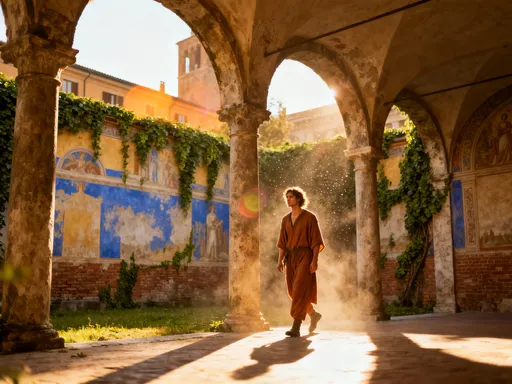
Take the Brera district, for example. At first glance, it appears charming but orderly—a postcard-perfect blend of cobblestone streets and outdoor cafes. But look closer, and you’ll find that nearly every corner holds a surprise. Behind tall wooden doors, hidden courtyards known as cortili open like secret gardens, many adorned with frescoes that have faded gently with time. These were once the private retreats of noble families, but today they serve as shared spaces where neighbors gather, children play, and artists find inspiration. Some still bear traces of 18th-century paintings—cherubs peeking from archways, floral patterns curling around windows—reminders that beauty was once woven into everyday domestic life.
Equally rich is the Isola neighborhood, once an industrial zone transformed by artists and architects into a hub of creative renewal. Here, street art is not vandalism but a respected form of public dialogue. Murals cover entire building facades, some depicting abstract patterns, others telling stories of migration, resilience, and community. One particularly moving piece, painted after a local factory closure, shows workers’ hands passing a single wrench upward, as if lifting hope from hardship. These artworks are not curated for tourists; they are born from local concerns and speak directly to the people who live here. Walking through Isola, one doesn’t feel like an observer but a witness to an ongoing cultural conversation.
Brera’s Secret: When Art Lives in Courtyards and Cafés
If Milan has a creative heart, it beats strongest in Brera. More than just a picturesque district, Brera functions as a living art ecosystem where creativity is not confined to galleries but integrated into the fabric of daily life. The Pinacoteca di Brera, one of Italy’s most important art collections, stands at its center, but the real magic happens in the spaces between—on benches where sketch artists draw passersby, in cafes where poets read their work, and in small shops where artisans craft frames, pigments, and brushes by hand.
One morning, I sat at a corner table in a quiet café just off Via Brera, sipping an almond milk cappuccino—a modern twist in a historic setting. Above me, a rotating exhibit of local paintings hung on the wall, each labeled with the artist’s name and a short statement about their inspiration. The owner, a woman in her fifties with silver-streaked hair, explained that she changes the artwork every six weeks and invites artists from the neighborhood to display their work for free. “Art should be part of life,” she said, “not locked away.” Her words stayed with me, echoing in every subsequent encounter with Brera’s creative spirit.
Later that day, I wandered into a tiny cloister tucked behind a bookshop. No signs marked its entrance, and I might have missed it entirely if not for the sound of a violin drifting through an open gate. Inside, a young conservatory student practiced beneath an arched portico, her music bouncing off centuries-old stone. The space, once part of a monastery, now belongs to the Accademia di Belle Arti, where students study painting, sculpture, and restoration. It was not a performance, not a tour—just a moment of pure artistic immersion, available to anyone who happened to walk by. In Brera, art is not something you visit; it’s something you stumble upon, something that finds you when you’re not looking.
Sforza Castle: A Fortress of Stories, Not Just Stone
Rising like a citadel from the edge of Parco Sempione, Sforza Castle is one of Milan’s most iconic landmarks. At first glance, it appears as a monument of power—a 15th-century fortress built to protect the ruling Visconti and Sforza families. But beyond its imposing walls lies a sanctuary of memory, housing museums, archives, and some of the city’s most profound artistic treasures. To visit Sforza Castle with haste is to see only its silhouette. To linger is to hear its whispers.
One of the most moving spaces within the complex is the Chapel of the Holy Nail, a small octagonal chapel designed by Donato Bramante. Its harmonious proportions and soft natural light create a sense of stillness that feels almost sacred. But even more powerful is the museum dedicated to ancient art, where Michelangelo’s final sculpture, the Rondanini Pietà, resides. Unlike his earlier, polished works, this piece is raw, unfinished—a haunting depiction of the Virgin Mary cradling the body of Christ, their forms merging into a single, sorrowful mass. Michelangelo worked on it until days before his death, chiseling away not for perfection, but for truth. Standing before it, I felt the weight of a lifetime of artistic pursuit, the kind that cannot be rushed.
To experience Sforza Castle deeply, timing and mindset matter. Early morning visits, just after opening, allow for quiet contemplation before tour groups arrive. Instead of rushing through each gallery, choose one room—one artwork—and stay with it. Sit on a bench. Observe the details. Let your eyes adjust to the light. The castle’s music archive, for instance, holds original manuscripts by Verdi and Bellini. Though you can’t touch them, seeing the handwritten notes, the smudges of ink, the composer’s corrections, creates a visceral connection across time. These are not exhibits; they are encounters. And they only happen when you give them space.
Navigli’s Soul: Where Canals Reflect More Than Light
As the sun begins to dip behind Milan’s rooftops, the Navigli district comes alive in a way that defies description. Once a network of commercial canals crucial to the city’s trade, these waterways now serve as arteries of culture, lined with bookshops, jazz bars, and trattorias where locals gather for evening aperitivo. But more than its nightlife, Navigli offers a sensory journey—one where art is reflected not just in galleries but in the ripples of water, the glow of lanterns, and the murals that stretch across warehouse walls.
One evening, I followed the Darsena canal on foot, moving slowly, letting the rhythm of the water guide my pace. Along the way, I passed a large mural depicting a woman’s face composed entirely of recycled materials—bottle caps for eyes, torn fabric for hair, rusted metal for skin. The artist, I later learned, was commenting on sustainability and the beauty of renewal. It wasn’t commissioned by the city; it was a gift from the community, painted during a local festival. These kinds of spontaneous artistic expressions are common in Navigli, where creativity thrives in the in-between spaces—on bridges, under arches, in abandoned storefronts turned pop-up galleries.
The district also hosts small cultural events that often go unnoticed by guidebooks. On Fridays, a collective of musicians gathers at a riverside piazza to play jazz, classical, and experimental sounds, inviting passersby to sit on the stone steps and listen. No tickets, no stage—just music flowing into the night. Meanwhile, independent bookshops like Libreria del Mare curate selections on art, poetry, and local history, often hosting readings and artist talks. These are not tourist traps; they are intimate spaces where Milan’s contemporary soul is shaped. To walk Navigli slowly is to witness a city in conversation with itself—honoring its past while imagining its future.
Museums Reimagined: Experiencing Art Without the Rush
Milan’s museums are world-renowned, but their greatness is often undermined by the way they’re visited—quickly, competitively, with eyes fixed on checklists. The Pinacoteca di Brera, home to masterpieces by Caravaggio, Raphael, and Hayez, is frequently crowded, with visitors snapping photos and moving on within minutes. Similarly, Santa Maria delle Grazie, where Leonardo da Vinci’s The Last Supper resides, requires timed entry and enforces strict rules: no bags, no photos, no lingering. Yet it is precisely in these spaces that slow looking becomes most transformative.
Imagine standing before Hayez’s The Kiss, a painting so iconic it appears on Italian currency. Most people glance, recognize, photograph, and leave. But what happens when you stay? When you study the way the woman’s dress flows like liquid gold, the tension in the man’s clenched hand, the shadow that cuts across their faces like a warning? The painting, created in 1859, was more than a romance—it was a political symbol of Italian unification, a quiet act of resistance. Without slowing down, this depth remains hidden.
The same is true for The Last Supper. Though visitors are given only 15 minutes in the refectory, the impact of the painting depends not on duration but on presence. I arrived early, having booked months in advance, and used every second to absorb not just the image but the space around it—the acoustics of the room, the way light entered from high windows, the silence that followed centuries of contemplation. I didn’t take a photo. Instead, I closed my eyes for a moment and tried to imagine what it must have felt like to be one of the monks who first saw it here, in this very room. That act of imagination—of stepping into history—is only possible when we resist the urge to document and instead choose to dwell.
For those planning to visit, a few practical tips can enhance the experience. Book tickets online well in advance, especially for Santa Maria delle Grazie. Visit museums on weekday mornings to avoid crowds. And most importantly, set a personal rule: spend at least 20 to 30 minutes with one artwork per visit. Let it speak to you. Let it unsettle you. Let it stay with you. This is not passive tourism; it is active engagement, a form of cultural listening.
Carrying Milan Home: How Slow Art Travel Changes You
Leaving Milan, I didn’t carry souvenirs in my suitcase—no scarves, no magnets, no bottles of limoncello. What I brought home was something quieter, deeper: a shift in perception. The habit of rushing, of ticking boxes, had been replaced by a new awareness—a sensitivity to detail, to silence, to the unseen layers of a place. I began to notice art in unexpected places: the pattern of tiles in my kitchen, the way light falls on my bookshelf in the afternoon, the rhythm of my neighbor’s garden, where flowers bloom in deliberate arrangements. Milan had not just shown me beauty; it had taught me how to see it.
Slow art travel is not a trend; it is a philosophy. It reminds us that culture is not consumed like a meal but absorbed like sunlight. It asks us to slow down, not out of laziness, but out of respect—for the artists who spent lifetimes perfecting their craft, for the communities that preserve traditions, for the cities that hold centuries of stories in their stones. When we move slowly, we stop being tourists and become participants in a larger human story.
And perhaps the most lasting gift of this journey is the realization that depth is always available—if we make space for it. You don’t need to travel far to practice this. You can begin in your own neighborhood: sit in a park and watch how shadows move, visit a local gallery without checking your phone, strike up a conversation with an artisan at a market. The principles of slow travel—presence, patience, curiosity—are portable. They don’t require a passport, only a willingness to look closely.
Milan, with its blend of grandeur and intimacy, its reverence for both tradition and innovation, offered the perfect setting for this transformation. It showed me that even in a city known for speed, there is room for stillness. That behind every polished surface, there is a hidden courtyard waiting to be discovered. And that the most unforgettable moments are often the quietest—the ones that don’t make it onto postcards, but linger in the heart long after the journey ends.