Where Time Slows Down: Hidden Markets of Khartoum You’ve Never Heard Of
You know that feeling when a city surprises you? Khartoum did exactly that. I went in expecting dust and heat, but found vibrant markets alive with rhythm and soul. Slow travel here isn’t just possible—it’s essential. Wandering through local bazaars, I discovered handwoven scarves, golden spices, and stories hidden in every corner. This is commerce with heart, not rush. If you want real connection, this is where to start. Khartoum’s markets are not merely places to shop; they are living spaces where culture breathes, traditions endure, and human interaction remains at the center of daily life. In a world increasingly driven by speed and convenience, these markets offer a rare invitation to pause, observe, and engage with authenticity.
The Rhythm of Slow Travel in Khartoum
Khartoum moves at a pace that defies the hurried rhythm of modern urban life. There is no rush hour in the way visitors from global cities might expect. Instead, life unfolds in measured steps, shaped by the sun’s arc across the sky and the call to prayer echoing from minarets. This natural cadence invites travelers to slow down, to shed the urgency that so often defines tourism elsewhere. In Khartoum, shopping is not a checklist activity. It is a sensory experience, a conversation, and often, a small ceremony of mutual respect between buyer and seller. Vendors do not push for quick sales. They offer tea, ask about your journey, and take time to explain the origin of a spice or the craftsmanship behind a woven basket. This relational approach transforms commerce into connection.
Contrast this with the bustling shopping centers of Nairobi, Lagos, or Johannesburg, where transactions are swift and interactions often impersonal. While those cities boast impressive infrastructure and modern retail, Khartoum’s markets preserve a different kind of value—one rooted in time, trust, and tradition. Here, time is not wasted; it is invested. The absence of digital payment systems in most stalls encourages face-to-face exchanges, reinforcing the human element of trade. For the thoughtful traveler, this is not a limitation but a gift. It allows space to observe, to learn, and to form genuine moments of exchange that linger long after the journey ends.
Slow travel in Khartoum is not a philosophy imposed by guides or tour books. It is woven into the fabric of daily life. Whether waiting for a ferry at the Nile dock or sitting on a low wooden stool in a shaded market corner, one learns to embrace stillness. The heat of the day discourages haste, and the rhythm of bartering—polite, patient, and often playful—further reinforces this unhurried way of being. For women travelers, particularly those in the 30 to 55 age range seeking meaningful, safe, and enriching experiences, Khartoum offers a rare opportunity to engage deeply with a culture that values presence over productivity.
Souq Arabi: The Pulse of Daily Life
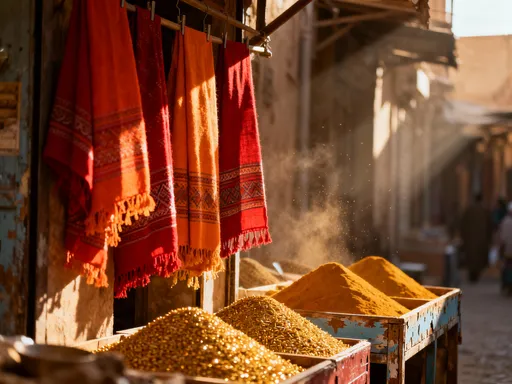
At the heart of Khartoum lies Souq Arabi, the city’s largest and most vibrant marketplace. More than just a commercial hub, it is a microcosm of Sudanese society. Stretching across several blocks in the central district, the souq hums with activity from early morning until dusk. The air is thick with the scent of cumin, cardamom, and freshly ground cloves. Brightly colored fabrics hang like banners overhead, fluttering in the warm breeze. The sounds of haggling, laughter, and the occasional call to prayer blend into a symphony that feels both chaotic and harmonious.
Walking through Souq Arabi is an immersion in color, texture, and tradition. The textile section is a feast for the eyes, with bolts of hand-dyed cotton, intricate embroidery, and soft silk scarves in deep indigo, saffron, and emerald. Vendors unfold each piece with pride, explaining the regional origins—some from Darfur, others from the eastern highlands. Nearby, spice merchants display pyramids of turmeric, sumac, and dried hibiscus, their powders arranged in neat rows like natural pigments. These are not pre-packaged goods but raw, unprocessed ingredients used in everyday Sudanese cooking.
The leather goods section reveals another layer of craftsmanship. Sandals with hand-stitched straps, durable handbags, and traditional saddles for donkeys are all made locally. The artisans here often work on-site, shaping and polishing leather with tools passed down through generations. Household items—from brass lanterns to woven mats—are sold in open-air stalls, each piece bearing the mark of practical beauty. For the visitor, navigating this labyrinth requires curiosity and patience. It is not a place to rush through with a list, but to wander with intention.
Respectful browsing is key. Always ask before taking photographs, and accept a cup of tea if offered—it is a sign of hospitality, not a sales tactic. Bargaining is expected, but it should be done with a smile and a sense of fairness. Begin by offering about two-thirds of the initial price, then negotiate gently. The goal is not to win but to reach a mutual agreement that honors both parties. By engaging in this way, travelers become part of the market’s rhythm rather than mere observers.
Omdurman’s Friday Market: A Weekly Ritual
Just across the Nile in Omdurman, the city’s spiritual and cultural heart, lies one of Africa’s most remarkable weekly markets. Every Friday, thousands gather for what is more than a shopping event—it is a social ritual, a family outing, and a celebration of local life. The market spills across wide avenues and narrow alleys, transforming the neighborhood into a living fairground. Unlike the daily commerce of Souq Arabi, this weekly gathering carries a festive energy, with music, food stalls, and children weaving through the crowds.
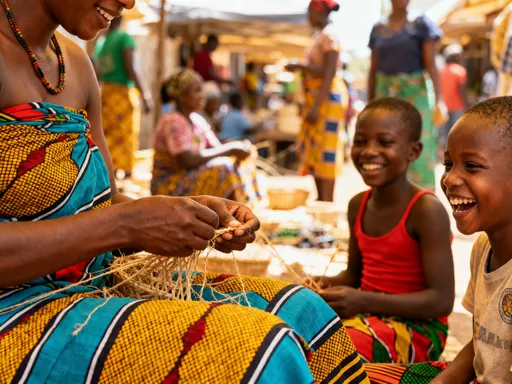
The craftsmanship on display here is extraordinary. Artisans from surrounding villages bring handmade baskets woven from palm fronds, each pattern telling a story of heritage and region. Traditional jebbas—long, flowing robes for men—are stitched with precision, often in white cotton or deep blue, and sold alongside intricately embroidered women’s dresses. Silver jewelry, crafted by Nubian silversmiths, glimmers in the sunlight. Necklaces, bracelets, and earrings feature geometric designs and semi-precious stones, each piece unique and hand-finished.
But the market is not only about goods. It is a place where elders sit under shaded tents, sipping tea and exchanging news. Women gather around spice stalls, comparing blends for the week’s meals. Young men inspect tools and textiles, discussing prices with quiet seriousness. This is commerce embedded in community, where economic exchange is inseparable from social connection. For visitors, the experience is deeply humanizing. It offers a window into the values that sustain Sudanese life: hospitality, patience, and mutual respect.
The best time to visit is mid-morning, when the market is fully alive but the heat is not yet overwhelming. The most authentic way to arrive is by local ferry from central Khartoum. The short ride across the Nile offers panoramic views of the city and a moment of calm before the sensory immersion begins. Taxis are also available, but the ferry adds to the journey’s richness. As you step onto the Omdurman shore, the sounds and scents of the market rise to meet you, welcoming you not as a tourist, but as a guest.
Hidden Artisan Corners in Bahri (Khartoum North)
North of the main city, across the Blue Nile, lies Bahri—often overlooked by visitors but rich with quiet craftsmanship. This industrial-adjacent district is home to family-run workshops where tradition is preserved in clay, spice, and thread. Unlike the grand souqs, these spaces are unassuming: small storefronts with hand-painted signs, open doors revealing men and women at work. To find them, one must venture beyond the tourist map and follow local recommendations.
One of the most remarkable sights in Bahri is the pottery workshops, where potters shape clay on foot-powered wheels just as their ancestors did centuries ago. The process is mesmerizing—hands moving with practiced ease, forming water jars, cooking pots, and decorative bowls. The clay is sourced locally, and the firing is done in simple kilns using dried dung as fuel. These vessels are not made for decoration but for daily use, yet their beauty lies in their functionality and the continuity of skill across generations.
Equally fascinating are the family-run spice grinders. Using ancient stone mills, often made of granite, they crush whole spices into fine powders without the use of electricity. The rhythmic grinding produces a low hum, and the air is perfumed with the sharpness of black pepper, the warmth of cinnamon, and the earthiness of cumin. These grinders supply not only local markets but also restaurants and households throughout Khartoum. Purchasing spices here means supporting a tradition that values purity and process over mass production.
For slow travelers, Bahri represents the road less traveled—not because it is dangerous or difficult, but because it requires intention. There are no guidebook highlights or Instagram hotspots here. Instead, there is authenticity. A simple conversation with a potter or a shared cup of tea with a spice merchant can become one of the most memorable moments of a trip. These interactions remind us that travel is not about collecting places, but about connecting with people.
Modern Meets Traditional: Al Mora Mall & Its Contrasts
In recent years, Khartoum has seen the rise of modern shopping spaces like Al Mora Mall, a glass-fronted complex offering air-conditioned comfort, international brands, and food courts. While convenient, especially during the midday heat, these spaces represent a different kind of consumer experience—one that prioritizes efficiency over interaction. Al Mora caters to a younger, urban demographic seeking global styles and digital payment options. It is not inherently negative, but it stands in stark contrast to the open-air markets that define the city’s soul.
Walking through Al Mora, one notices the quiet. There are no calls from vendors, no scent of roasting coffee, no children running between stalls. The architecture is sleek, the lighting artificial, and the atmosphere controlled. While it offers a refuge from the sun, it also creates a barrier between people and the raw energy of street-level commerce. For many Sudanese youth, especially in Khartoum, this shift reflects changing lifestyles—faster, more connected, and influenced by global trends.
Yet, even in this modern setting, echoes of tradition remain. Some local designers sell contemporary takes on Sudanese embroidery within the mall. Cafes serve Sudanese coffee with modern presentation. These small integrations suggest that modernity does not have to erase heritage. The challenge lies in balance—preserving the depth of cultural markets while embracing the conveniences of urban development. For travelers, visiting both Al Mora and the traditional souqs offers a fuller picture of Khartoum’s evolving identity.
The contrast is not about judging one as better than the other, but about understanding the spectrum of life in a changing city. While Al Mora may appeal to those seeking comfort and familiarity, the soul of Khartoum beats strongest in the open-air markets, where every transaction carries a story, and every vendor remembers your face.
What to Buy and Why It Matters
When traveling, what we choose to bring home matters. In Khartoum, the most meaningful souvenirs are not mass-produced trinkets but items rooted in culture and craft. Hand-embroidered textiles, for example, are more than decorative—they are expressions of regional identity, with patterns that vary from village to village. A scarf from Darfur may feature bold geometric shapes, while one from the Nuba Mountains might include symbolic motifs passed down through generations.
Sudanese coffee beans are another treasure. Unlike commercial blends, locally roasted coffee is often ground fresh and brewed in a jebena, a traditional clay pot. The aroma is rich and smoky, the flavor deep and complex. Bringing home a small bag supports local farmers and preserves a ritual that brings families together every afternoon. Similarly, frankincense and myrrh—resins harvested in eastern Sudan—have been used for centuries in homes for their calming scent and natural purifying properties. Burning them in a brazier is a simple act that connects the present to ancient traditions.
Purchasing these items directly from artisans ensures that money goes to those who made them, not to middlemen or importers. It also reduces the demand for counterfeit goods—such as machine-made “handwoven” baskets or pre-packaged “traditional” spices—that undermine local economies. Mindful shopping means asking questions: Who made this? How long did it take? Is this truly local?
By choosing authenticity, travelers contribute to sustainable livelihoods. A woman weaving baskets in Omdurman, a potter shaping clay in Bahri, a spice grinder turning stone mills—each benefits when visitors value their work. These purchases become more than souvenirs; they become acts of solidarity and respect.
Practical Tips for the Thoughtful Traveler
To make the most of Khartoum’s markets, a few practical considerations can enhance both comfort and cultural sensitivity. The best times to visit are early morning or late afternoon, when the sun is less intense and the markets are most active. Mornings are ideal for Souq Arabi, as vendors are setting up and the air is cooler. Fridays in Omdurman should be approached by mid-morning to experience the full energy of the weekly market.
Dress modestly and respectfully. For women, this means covering shoulders and knees. Lightweight, breathable fabrics in neutral or earth tones are both practical and appropriate. While Sudan is welcoming, maintaining cultural sensitivity fosters trust and openness. Avoid overly tight or revealing clothing, and always ask permission before photographing people.
Cash is essential. The Sudanese pound (SDG) is the only widely accepted currency in local markets. Carry small denominations for easier transactions, and inspect bills carefully to avoid counterfeits. ATMs are available in central areas, but it’s wise to withdraw enough before heading to more remote markets. Keep money in a secure, discreet pouch.
The climate demands attention. Khartoum is hot, especially between March and June. Stay hydrated by carrying water, and take breaks in shaded areas. Many vendors will offer tea—accepting is a gesture of goodwill. Use sunscreen, wear a hat, and listen to your body. Traveling with children? Bring snacks and plan for rest. The markets are family-friendly, but pacing is important.
Conclusion: More Than Shopping—A Human Connection
The markets of Khartoum are not just places to buy things. They are spaces where time slows, where stories are exchanged, and where the act of shopping becomes an act of listening. For the thoughtful traveler, especially women seeking depth, safety, and connection, these markets offer a rare kind of richness—one measured not in currency, but in human warmth.
Each visit became the emotional core of my journey. A conversation with a spice seller about her grandmother’s recipes. A shared laugh with a tailor adjusting a scarf’s drape. A moment of silence watching a potter shape clay under the morning sun. These were not transactions. They were moments of mutual recognition—of seeing and being seen.
Slow travel in Khartoum teaches that commerce can be kind, that patience is a form of respect, and that the simplest exchanges can carry the deepest meaning. It invites us to approach the city not as tourists, but as guests—curious, humble, and open-hearted.
The richest purchases I brought home were not wrapped in paper or tucked into bags. They were the memories of connection, the quiet understanding that we are all part of a larger human story. So when you go, walk slowly. Listen more than you speak. Let the rhythm of the market guide you. And remember: true discovery happens not when we rush to see everything, but when we stop, breathe, and allow a place to reveal itself—one conversation at a time.